
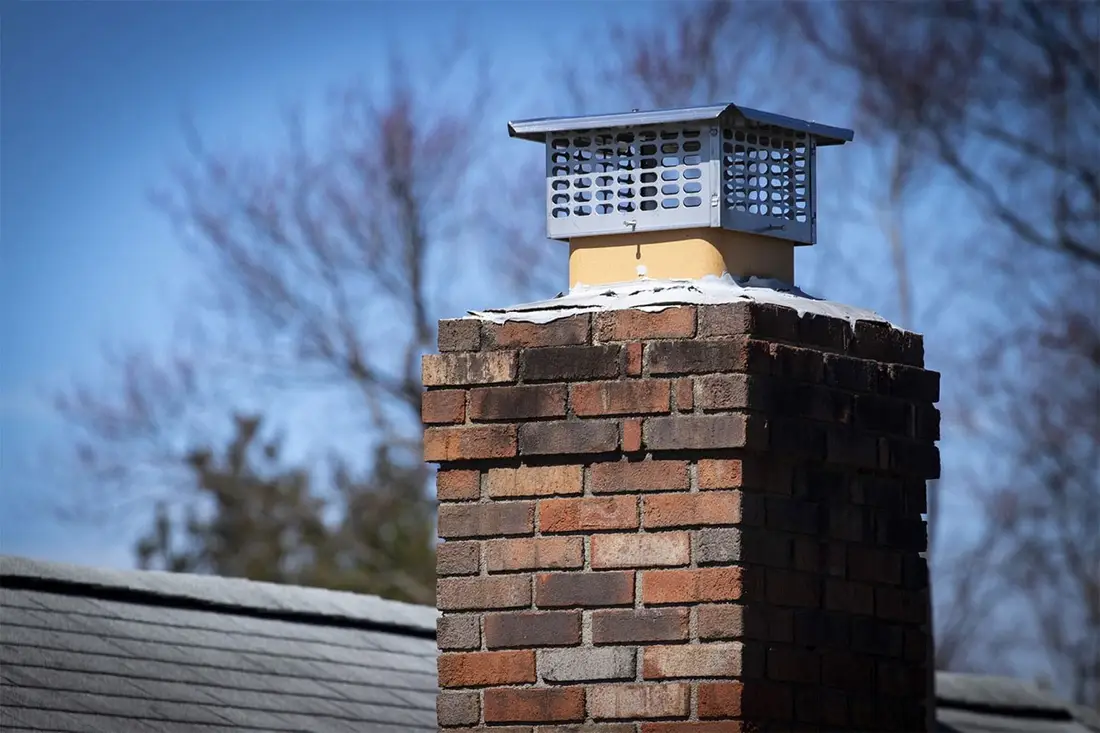
What the Liner Is Quietly Doing
Every time a fire burns, hot gases, smoke, and corrosive byproducts travel up the flue. The liner is the barrier that keeps all of that inside its intended path — protecting the surrounding masonry and the framing of the house from heat and from gases that should never reach living space. When a liner is sound, nobody thinks about it. When it cracks, shifts, or erodes, the chimney may still draw and the fireplace may still look fine, while the protection the house depends on is quietly compromised.
Most chimneys in American homes use one of two liner types: clay tile, common in masonry construction for generations, or stainless steel, widely used in relining work. Understanding how each behaves over time helps make sense of an inspection report and of the repair conversation that may follow. Our overview of chimney liners covers the basics; this article compares the two materials directly.
Clay Tile: Strong, Common, and Brittle
Clay tile liners are stacked sections of fired ceramic set inside the chimney as it is built. The material handles high heat well and resists the corrosive side of flue gases, which is why it became the default for so long. In a chimney that is used moderately and kept dry, clay tile can serve for decades.
Its weakness is brittleness. Clay does not flex. A sudden temperature spike — the kind that happens when accumulated deposits ignite inside the flue — can crack tiles in a single event. Earth movement, settling, and freeze-thaw pressure on the surrounding masonry can also open cracks or offset the joints between sections. Because the tiles are built into the chimney, repairing a damaged section is rarely simple; a few broken tiles deep in the stack usually point toward relining rather than patching.
Stainless Steel: The Relining Workhorse
Stainless steel liners are continuous metal systems installed inside an existing flue, typically in one run from appliance to top. That continuity is their main advantage: no stacked joints to offset, and a smooth interior that drafts well and is easier to sweep clean. Quality systems are insulated, which keeps flue gases warmer, improves draft, and reduces deposit buildup on the liner walls.
Steel is also the practical answer when clay fails. Rather than rebuilding a chimney from the inside out, a steel system can usually be installed through the existing structure with far less disruption. The material resists corrosion from both wood and gas appliances when the correct grade is matched to the fuel. Like anything metal, it is not immortal — very old, uninsulated, or incorrectly sized installations can underperform — but a properly specified system is a long-term fix, not a patch.
How the Decision Usually Gets Made
The honest answer is that condition decides more than preference. If a camera inspection shows clay tiles that are intact, aligned, and clean, there is rarely a reason to replace them. If the same inspection shows cracked, spalling, or offset tiles, the conversation turns to relining, and stainless steel is the option most homeowners choose for the reasons above. You can see how those cracks are found in our article on creosote stages and what they mean, since deposit buildup and liner damage often appear in the same report.
Fuel type, flue size, and the appliance being vented all factor into the specification. A liner must be sized to the fireplace or stove it serves; too large and draft suffers, too small and the appliance cannot vent freely. That sizing, the insulation choice, and the condition of the surrounding masonry are exactly what a documented inspection is for. The recommendation should come from images of your flue, not from a preference for one material in the abstract.
The Takeaway for Homeowners
Neither material is a mistake. Clay tile has protected homes for generations and still does where it remains sound. Stainless steel earns its place when age, heat, or movement has done its work on the original lining. What matters is knowing which situation your chimney is in — and that knowledge only comes from looking inside the flue, on camera, before deciding anything.