
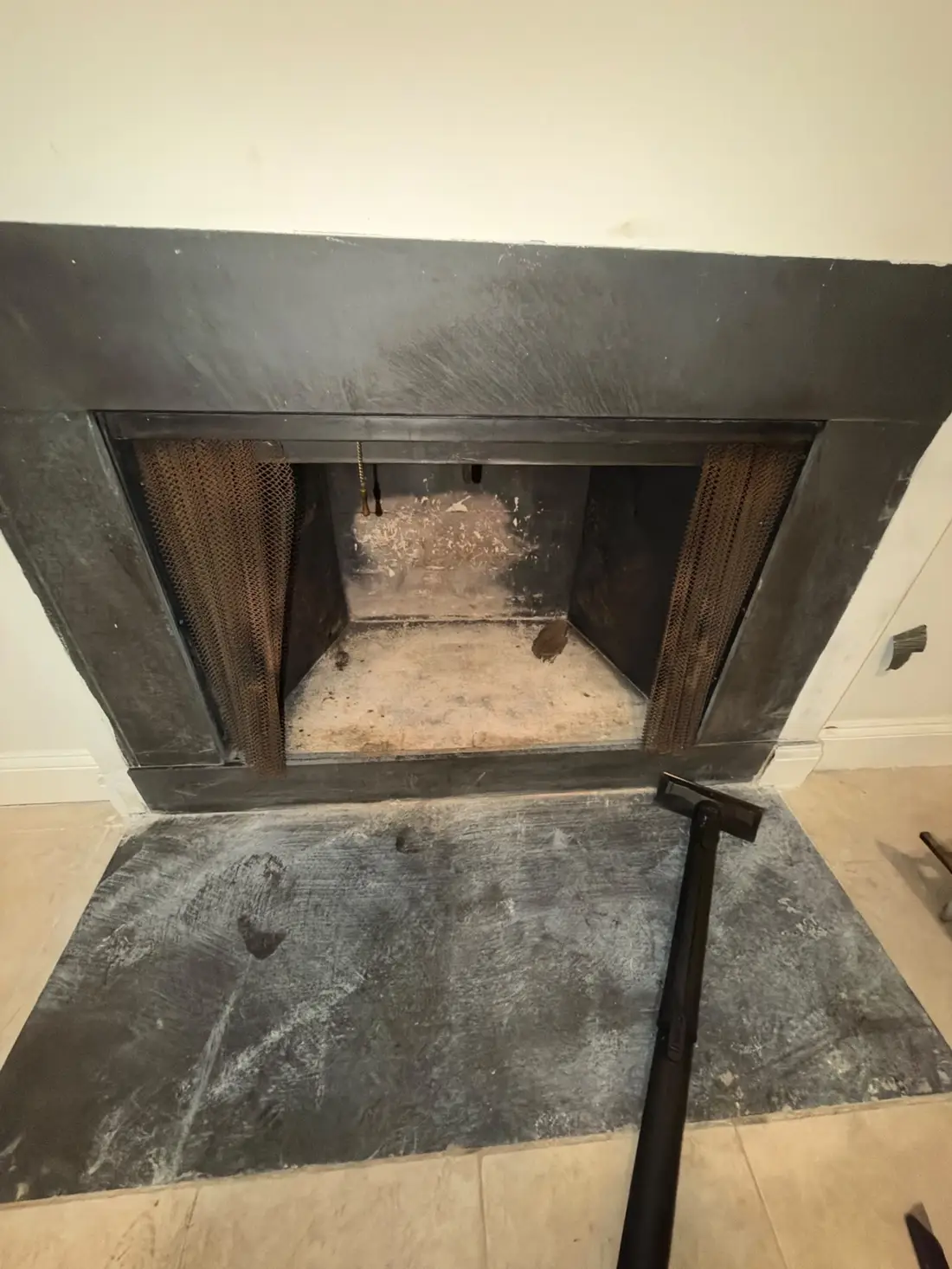
Ask ten chimney owners how often a chimney should be swept and you will hear ten different answers, most of them based on a calendar. The calendar is a useful reminder, but it is not what actually decides the schedule. What matters is what has been happening inside the flue since the last cleaning: how much wood you burned, how that wood was seasoned, how hot your fires ran, and how the flue handled the smoke.
Burning Habits Set the Pace
Every fire leaves something behind. Smoke carries fine particles and vapor up the flue, and as those gases cool against the flue walls, a residue settles and builds. The more hours of burning, the faster that layer grows. A primary wood stove that runs from November through March can build a meaningful layer in a single season, while a decorative fireplace used on holidays may take several seasons to reach the same point. This is why honest guidance is always tied to use, not just to the date of the last visit.
Fire style matters as much as fire count. Low, smoldering fires that are damped down overnight produce cooler, slower smoke, and cooler smoke deposits more residue. Hot, well-aired fires burn cleaner and send less unburned material up the chimney.
Your Fuel Makes a Difference
Well-seasoned hardwood is the friendliest fuel a chimney can ask for. Wood that has dried properly burns hotter and cleaner, leaving a lighter, flakier deposit that brushes away easily. Green or damp wood does the opposite: it hisses, smokes heavily, and coats the flue with a heavier, stickier layer. Softwoods are not forbidden, but resinous wood burned cool and slow tends to add to the buildup faster than dry hardwood burned hot.
Never burn cardboard, wrapping paper, or household trash, which send sparks and chemical residue up the flue. Keeping fuel clean and dry is the easiest way to stretch the time between sweepings. Our guide to creosote stages and what they mean explains how that residue changes as it builds, and why the stage matters as much as the amount.
Signs the Flue Is Asking for Attention
Between visits, your chimney gives clues. A strong, sharp, campfire-like smell on humid days often means deposits are present and absorbing moisture. Smoke that hesitates, puffs back, or leaves soot marks above the firebox opening suggests the passage is narrowing or the draft is struggling.
None of these signs require panic, but they do argue against waiting for an arbitrary date. A chimney sweeping visit clears the passage, and the technician can tell you, based on what actually came out of your flue, how your personal schedule is shaping up. That feedback loop, visit by visit, is how a realistic interval gets set for your home instead of a generic one.
A Practical Rhythm for Most Homes
For a home that burns regularly through the heating season, having the chimney swept and looked over once a year is a sensible rhythm. It keeps deposits from reaching the heavier stages, catches small problems while they are still small, and times the work for late summer or early fall, before the first cold snap puts every fireplace in the neighborhood back into service. Lighter users can sometimes stretch the interval, but the check itself is still worthwhile, because animals, debris, and weather damage do not care how often you burn.
If you are unsure where your chimney stands, start with a chimney inspection. At Eagle Chimney ProTech, inspections are documented with camera images and written findings, so you see exactly what the technician sees and can decide on next steps without pressure. Local crews by state and city have served homeowners since 2012, and we are open Sunday through Friday with phones answered around the clock.
What a Sweeping Visit Actually Does
A proper sweeping is more than running a brush. The work area is protected, the flue is brushed, deposits are collected and removed, and the firebox, smoke chamber, and damper are cleaned and checked. When the job is done, you should hear plainly what was found: how much buildup was present, what condition the visible parts are in, and whether anything deserves attention before the next season. That honest summary is the real product, because it turns a routine cleaning into a plan for the year ahead.