
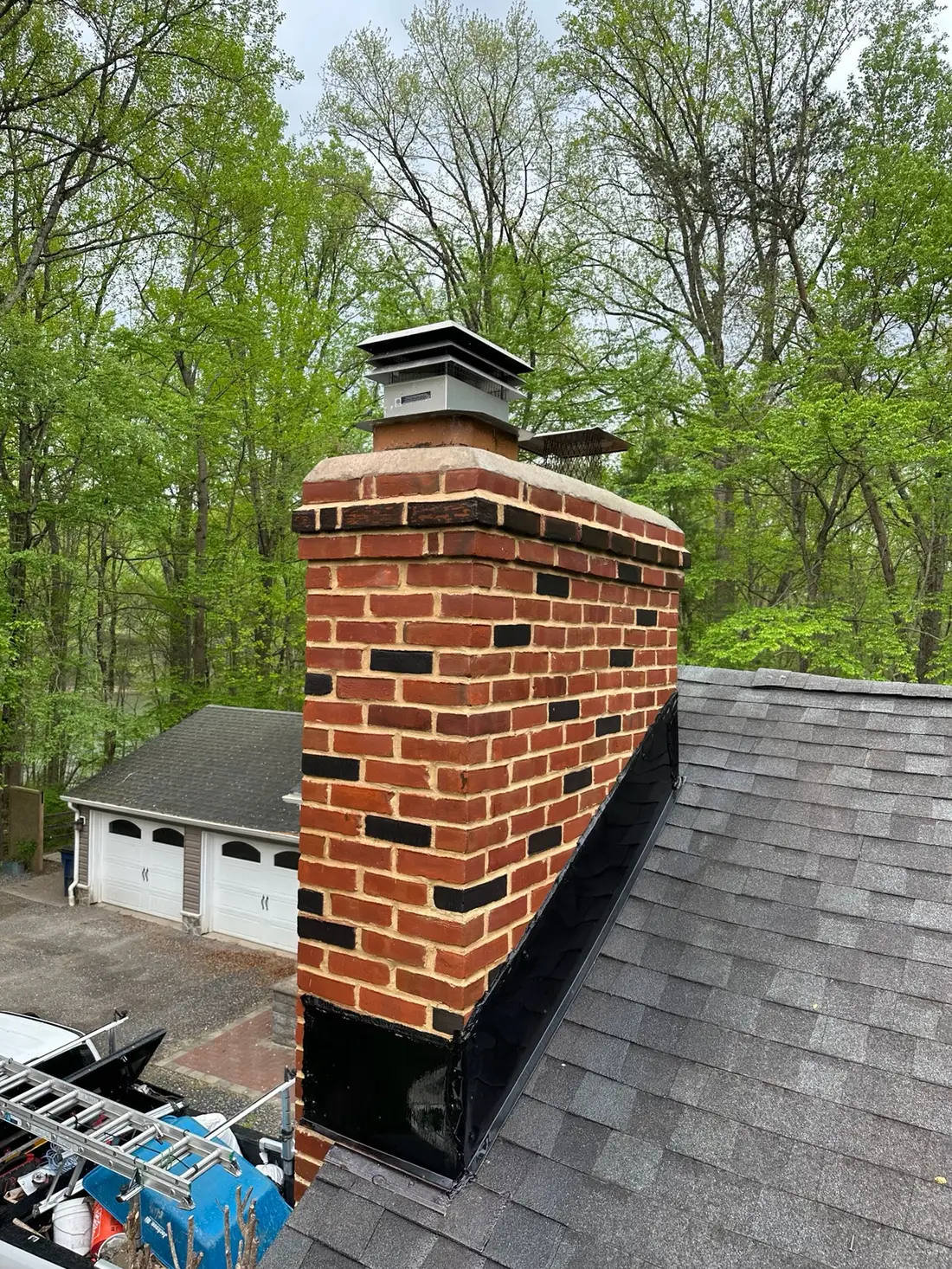
Mortar Is the Sacrificial Layer
On a brick chimney, the bricks get the attention, but the mortar does the quiet suffering. Mortar is deliberately the softer of the two materials. It absorbs the movement, moisture, and freeze-thaw stress of the seasons so the bricks do not have to. Over a span of decades, that sacrifice shows: joints erode back from the face of the brick, surfaces turn sandy, and eventually pieces begin to loosen or fall away entirely.
This is normal aging, not a defect in the original work. What matters is catching it at the right stage. Tuckpointing — grinding out the failed mortar to a sound depth and packing in fresh material — exists precisely for this moment in a chimney's life. Done in time, it renews the weather seal of the whole stack. Done too late, the conversation shifts from mortar to bricks, and from maintenance to rebuilding.
Reading the Signs From the Ground
You do not need to climb anything to spot the early evidence. Mortar joints that sit noticeably recessed behind the brick face, cracks running along the joints, a sandy or crumbly look, and white staining on the brickwork all suggest the joints are giving up their hold on water. Inside the house, staining on ceilings or walls near the chimney chase can mean moisture is already traveling through those open joints. Our guide to where chimney water gets in explains how failed joints fit into the bigger leak picture.
The pattern matters too. Joints usually fail first where weather hits hardest — the top courses below the crown, the side facing driving rain, and any section that stays damp. A chimney can look solid from the street while its upper joints are hollow. That is why close-up examination from the roof, not a glance from the driveway, settles the question.
What Proper Tuckpointing Involves
Real tuckpointing is more than smearing new mortar over old. The deteriorated material is ground or cut out to a consistent depth, reaching back to sound mortar, and the dust is cleared so the new material can bond. Fresh mortar — matched in strength and character to what the chimney was built with — is then packed into the joints in layers and tooled to a profile that sheds water.
The matching step deserves emphasis. Mortar that is harder than the original can do real harm: instead of the joint sacrificing itself, the brick faces begin to crack and spall. This is one of the most common well-intentioned mistakes in masonry repair. The goal is a joint that behaves like the one it replaces. Homeowners comparing quotes for chimney repair and masonry work should ask how the old mortar will be removed and what the new mix will be matched to; the answers reveal a lot about the workmanship on offer.
Why Timing Changes the Bill
Mortar repair follows a simple economic logic: joints are cheaper than bricks. While the brick units remain sound, tuckpointing restores the wall's defense at the cost of labor and mortar. Once water has worked through open joints for enough seasons, bricks begin to absorb it, freeze, and break apart. At that point the repair includes cutting out and replacing damaged brick, and in neglected cases, rebuilding sections of the stack from the roofline up.
There is also a safety dimension. A chimney is a tall, heavy structure, and mortar is what holds it together. Severely deteriorated joints on an upper stack are not just a leak risk; they are a stability question. A written assessment with photographs separates the cosmetic from the structural, so the decision can be made on evidence.
Keeping Joints Alive Longer
After tuckpointing, the biggest favor a homeowner can do the new joints is to keep water off them. A sound crown, a cap that sheds rain, and flashing that does its job all reduce the moisture load the mortar has to endure. The relationship between caps, crowns, and masonry life is covered in the case for a chimney cap. With the water managed, fresh joints should serve for many years — quietly doing the unglamorous work that keeps the bricks, and the chimney, standing.