
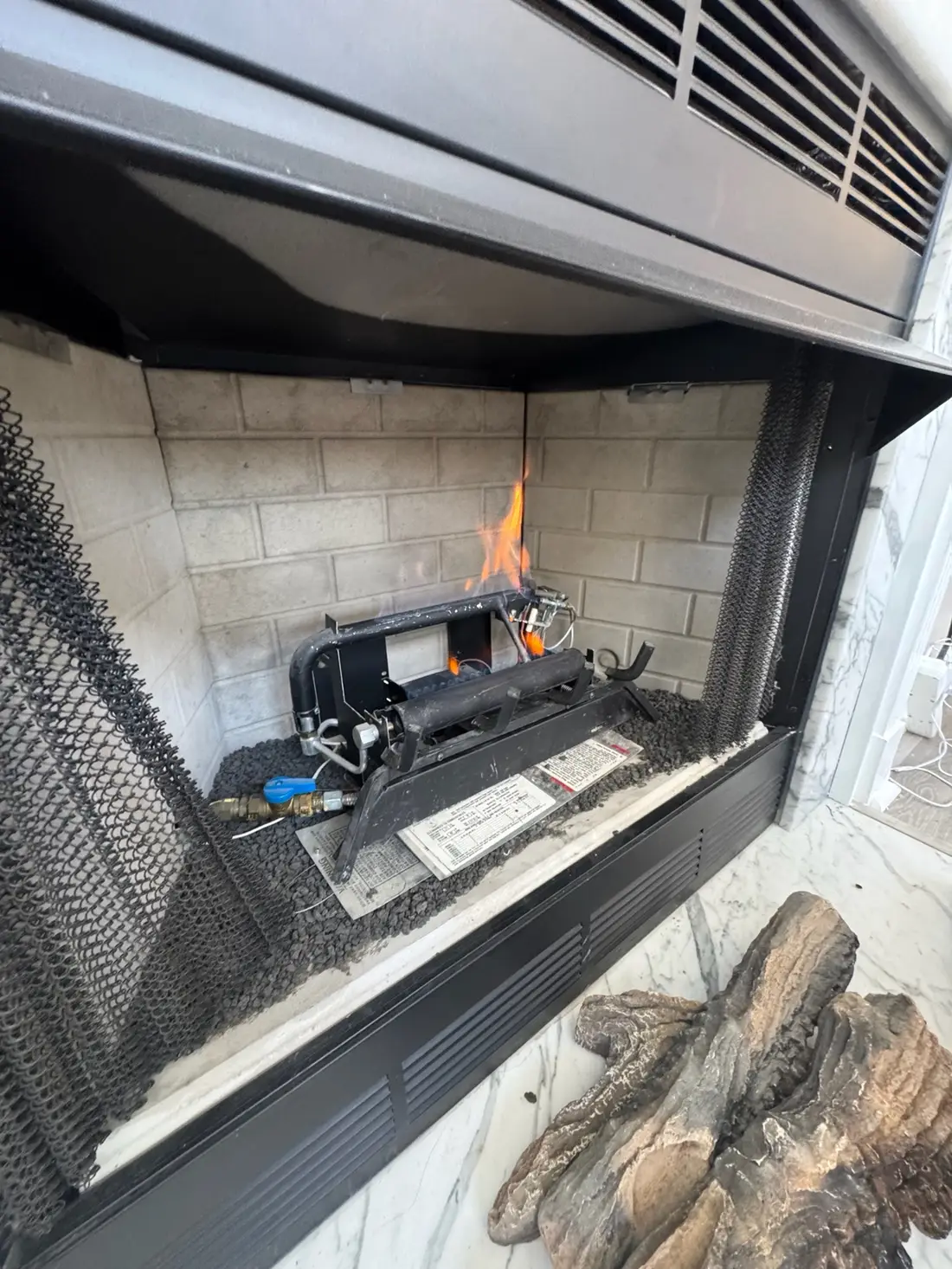
Gas fireplaces have a reputation for being the effortless option: no wood to stack, no ash to haul, just a switch or a remote and instant flame. That convenience is real, but it has a side effect. Because a gas unit asks so little of its owner day to day, its maintenance needs quietly slip off the calendar. Yet a gas fireplace is still a combustion appliance with a burner, a venting path, sensors, and seals, and every one of those parts ages whether the flames are lit daily or twice a year. Yearly service is how it stays as dependable as it feels.
What Actually Gets Dirty in a Gas Unit
Gas burns far cleaner than wood, but not perfectly clean. Over a season, dust, pet hair, and household lint settle on the burner and in the air passages. Spiders are fond of the small tubes and orifices, and a single web can distort or block gas flow. The glass front develops a hazy film from combustion byproducts and mineral traces, and that film bakes on harder the longer it sits.
The venting path needs attention too. A gas fireplace vents through a flue or direct-vent system that can host the same nests and debris as any chimney, which is why vent checks pair naturally with fireplace cleaning service for the rest of the system. Clean burners and clear vents are what keep the flame pattern even, blue-based, and efficient instead of lazy, yellow, and soot-producing.
The Safety Checks That Matter Most
A service visit is built around verification. The technician confirms the ignition system fires reliably, the pilot or electronic igniter is healthy, and the safety sensors do their job of shutting gas flow if the flame fails. Connections are checked for tightness, the logs or media are inspected for cracks and correct placement, and the gasket sealing the glass is examined, because that seal keeps combustion products moving up the vent instead of into the room.
Flame appearance is read like a report card. Sooting on the glass or logs, a flame that lifts, rolls, or burns unevenly, and delayed ignition that goes with a small whoomp instead of a smooth light all point to specific causes a technician can correct. Catching those signs during a calm autumn visit is far better than discovering them on the coldest night of the year.
Signs Your Gas Fireplace Is Asking for Service
Between visits, the unit talks. A rotten-egg or unusual odor around the fireplace should never be ignored; leave and call your gas utility or emergency line if you suspect a leak, and treat any sulfur smell seriously. Everyday service clues are milder: the pilot will not stay lit, the remote or wall switch works only sometimes, the glass fogs quickly after cleaning, or the flame looks noticeably more yellow than it used to.
Clicking, popping from expanding metal is normal, but new noises, soot appearing on walls near the unit, or the fireplace shutting itself off mid-evening are all worth a visit. So is simple age: if you cannot remember the last time the unit was serviced, that is itself the sign. Our broader look at chimney inspections explains how venting checks fit into the picture for both gas and wood systems.
What a Yearly Visit Includes
A thorough gas service visit cleans the burner, pilot assembly, and accessible air passages, removes and cleans the glass properly, inspects logs and embers, tests ignition and safety shutoffs, checks connections and seals, and examines the venting for blockage or damage. The result should be summarized in writing: what was cleaned, what was tested, and anything that deserves watching or replacing.
At Eagle Chimney ProTech, that written, evidence-first approach has guided our work since 2012, and any recommended repair is quoted in writing before it is done. Local crews by state and city service gas and wood systems alike, open Sunday through Friday with phones answered around the clock, so booking before the heating season rush is easy.
The Payoff for a Small Habit
Yearly service buys three things: reliability on the nights you want the fire most, efficiency from a burner burning the way it was designed to, and early warning on parts, like igniters and gaskets, that are inexpensive to replace before they fail outright. For an appliance built around convenience, one scheduled visit a year is a fair trade, and it keeps the effortless feeling honest.